

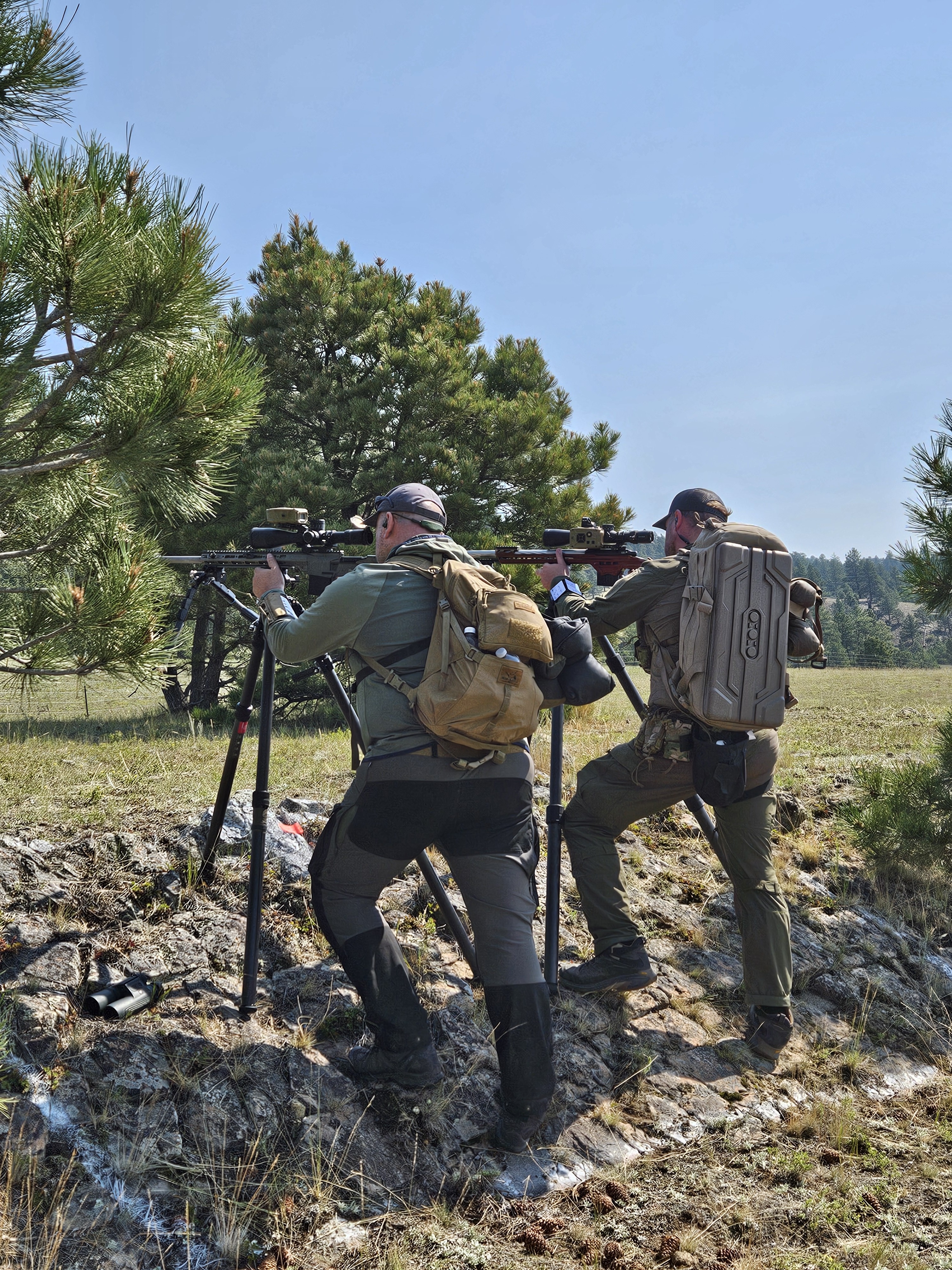
This week was my kids' spring break, so we ended up going on a road trip of sorts. We flew to Houston, rented a car, visited the Space Center, checked out Galveston, then drove up to Dallas. My dayjob is in Dallas and I need to visit the office occasionally. Truthfully, I need to visit the office more often than I currently do, but given my family situation that is a little tricky.
My kids are very good travel companions, so we decided to drive back to Albuquerque instead of flying. The way the timing worked out, we had a day to make a detour and drive up to Arkansas to visit John Baker and his Tacom HQ operation.
I've known John for a few years. He has visited with me about three years ago to talk about his their reticle idea and a few other things
I think the reticle idea is sound and we should see a version of it in a scope soon enough. I'll do a thorough coverage at that point.
This time around, the reticle was not the main reason behind my visit. John is a creative guy and they do several interesting things there. Everything they do is clever and outside the box. For example, to the best of my knowledge, they were the first to come up with different ways to shift the POI for ELR shooting with their TARAC devices. Alpha and Bravo TARAC devices use prisms to shift the zero of the optic, but a predetermined angle. I have a flip-up Alpha TARAC set up to help with my subsonic ELR pursuits. Bravo TARAC attaches the prism to the objective of the riflescope which works beter with large objective designs. Since Tacom came up with it, the idea has been pirated by a couple of people, most prominently by Nightforce. Technically, Tacom has a patent on it, but this appears to be a situation where a large company (Nightforce) shamelessly muscled a small company (TacomHQ) out of their IP, knowing fully well that they have more money for lawyers. To be fair, John does not talk about it too much, so this is just a guess on my part (although I am sure I am going to get a nastygram from Nightforce lawyers for posting this. They seem to really enjoy pushing small independent guys around).
Charlie Tarac uses a periscope instead of a prism to optically add slope for ELR shooting. Delta Tarac does mostly the same things except it also offsets the line of sight laterally to avoid the mirage from the barrel.
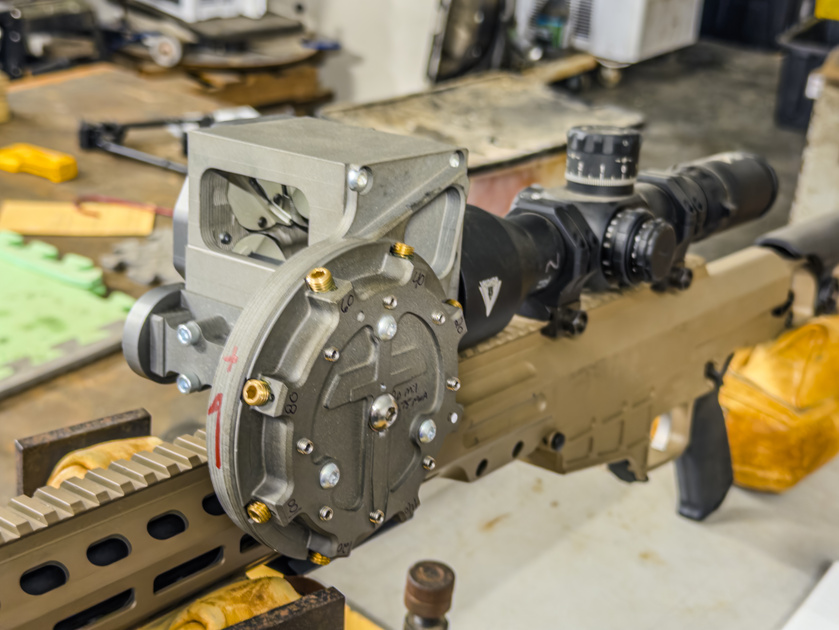
The new thing with TARAC devices for this year seems to be an adjustable version of the Charlie. There is a large side wheel that allows you to dial up to 900MOA of extra slope.

The reason I wanted to spend a little time with Tacom was the structured barrel. I first ran into this concept a few years ago and thought it was an interesting idea.
Initially, my plan was to pick an appropriate action and have John make me a 300NM structured barrel for an ELR bolt action rifle. I still want a 300NM and I might put one together eventually. However, I never quite pulled the trigger on that for a few reasons. One is that I simply have very limited use for such a gun. I still want one, but I do not have easy access to a place wehre I can really stretch the legs of a caliber with that kind of capability. The reason I wanted to put one together with a structured barrel is that they are are getting very good lifetime out of these and they are very easy to get to shoot properly.
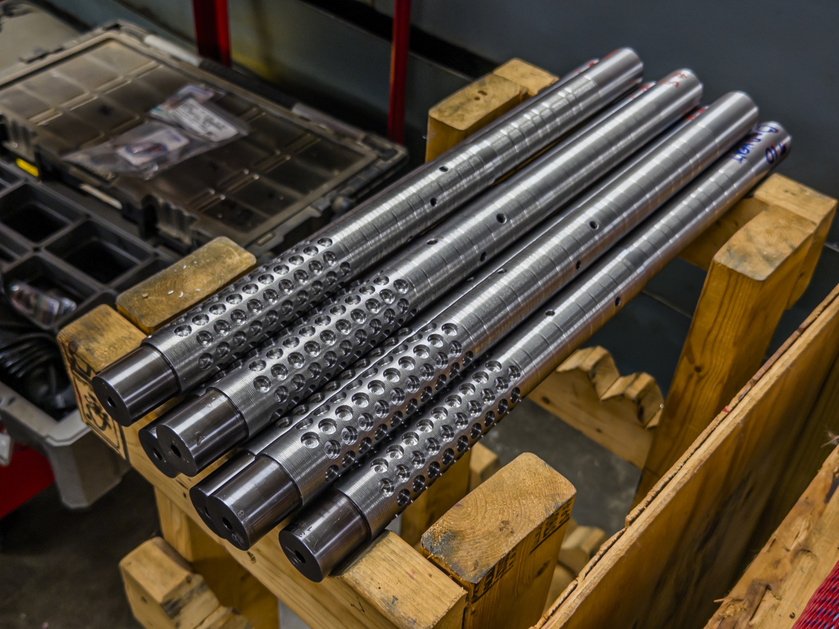
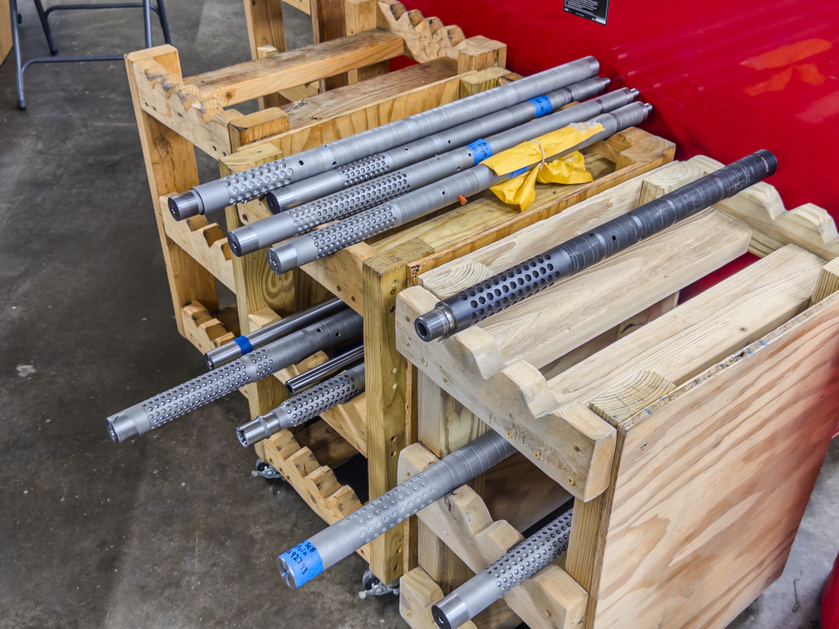
They have several version of the structured barrel design, but fundamentally they start with a 1.5" diameter barrel blank and mill out a bunch of material. The most disinctive features are deep longitudinal cylindrical channels drilled parallel to the bore. The start at the muzzle and go back toward the chamber. They do not make it all the way to the chamber. On the outer surface of the barrel, there are additional featuers designed for eliminating vibrational nodes and increasing surface area for better heat exchange. There is quite a lot of technical informaiton on their website: https://tacomhq.com/structured-barrels/
Structured barrels look very beefy because they start out from large diameter blanks and they are decidedly not light-weight barrels. However, by the standards of typical match barrels they are on the lighter side of things because of how much material has been removed. Given their impressive vibration dampening advantages, a few months ago I shifted gears and started leaning toward putting together a large frame AR around Tacom's structured barrel.

With the precisely calculated mechancial structure, these barrels acomplish two very complicated things simultaneously: they are harmonically dead and they do not get hot.
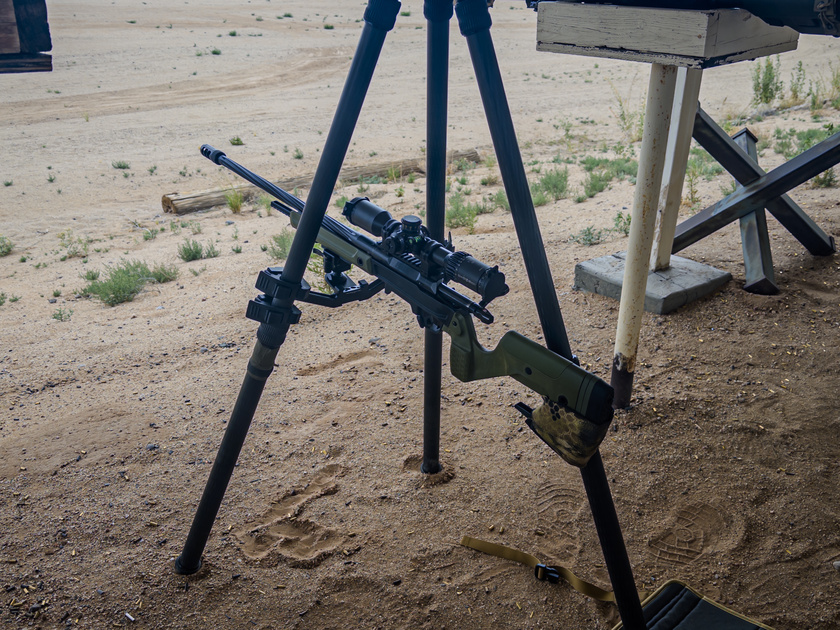
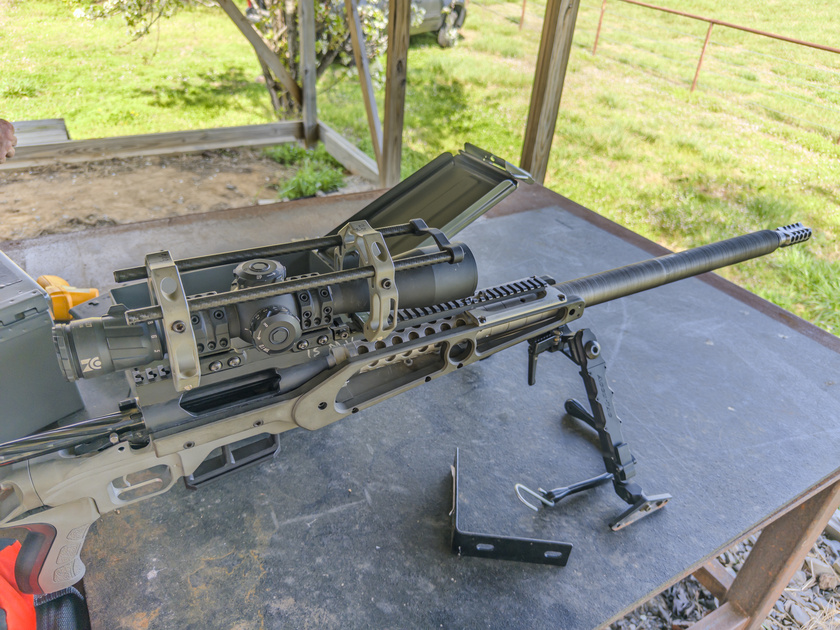
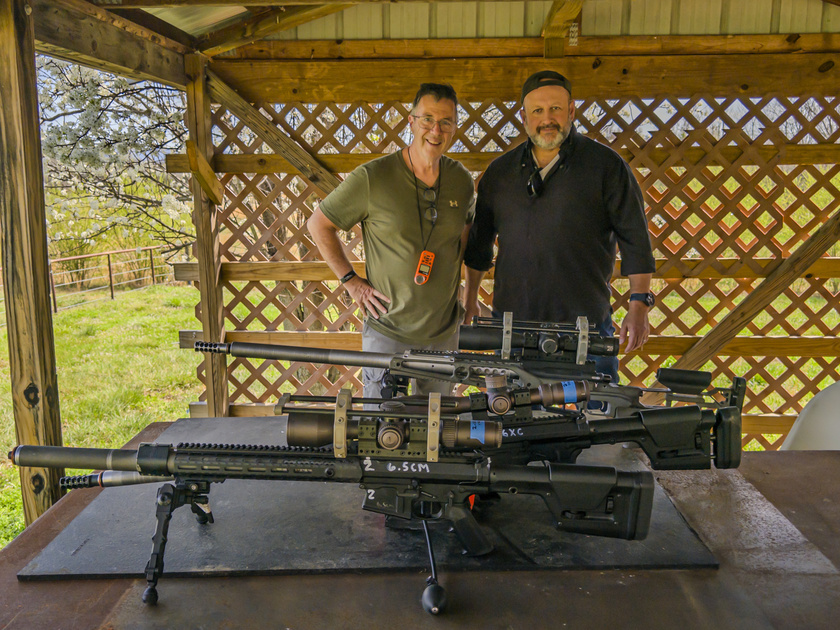
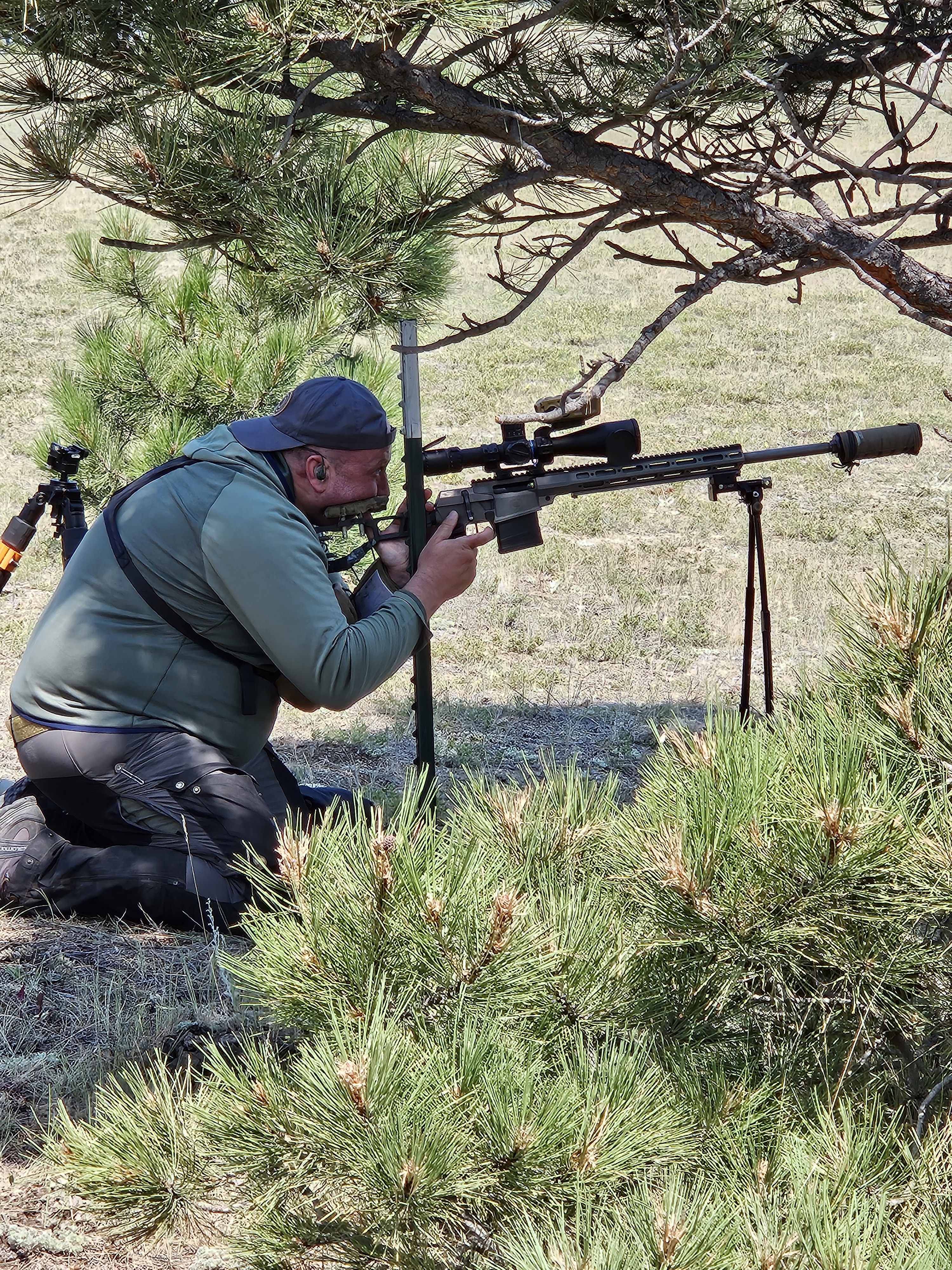
During my visit, we shot two guns with structured barrels: a 6.5CM AR-10 and a 300NM bolt gun.
We did not do mag dumps or anything that silly. However, after 10 rounds of rather rapidly fired 6.5CM, the barrel was warm, but not hot. Temperature distribution was arguably the most remarkable part. Using an infrared thermometer, it was easy to show that the warmest part of the barrel was around the middle (near the gas block on the semi-auto), The breech end of the barrel was cooler to the touch and measure at a lower temperature. Basically, the barrel never got very hot and whatever heat it accumulated was shed very rapidly.
The feel of the recoil impulse is really odd in that it is completely muted and there was no muzzle rise to speal off. I suspect a part of the was the muzzle brake, but this lack of discernible resonant frequencies made the recoil cycle extremely gentle. I was shooting an IPSC at 350 yards and the recoil impulse never moved the reticle off the plate. I fired the last four shots as rapidly as I could pull the trigger. Everything was on the plate. The rifle was not light at right around 14lbs with the scope, but I expected a lot more movement out of it even with the muzzlebrake. Most gas guns have this slight "pitchiness" to them and I saw none of that.
The 300NM boltgun was slightly heavier, but with the much more powerful round the recoil did move the reticle off of the target, but not by much.

I never lost sight of the target during the reocil impulse and the feel was, again, very muted and controllable. I am not sure how heavy the boltgun was, but definitely less than 20lbs. I would guess it was around 17lbs, but I'll check with John.

While both guns were very impressive, the semi-auto shot unlike any other gas gun I have ever pulled the trigger on. No gas gun ever has a truly free floated barrel, since there is a gas block attached to it. However, the combination of the structured barrel with a unque way that John has of putting the upper together, is the closest I have seen to date.
He bonds the barrel extension to the upper receiver and then screws a shouldered barrel into that. The upper receiver is the Aero M5E1 Enhanced since the beefy upper receiver extension helps decouple the handguard from the barrel. Also, the rather beefy structured barrel needs a large diameter handguard which this is. The gas block they make is a custom affair that is probably better described as "tunable" rather than adjustable. It is not designed for making frequent adjustments. The idea is to tune your gas system for perfromance and reliability, then leave it alone. I plan to do exactly that.
Since I was heading this way, I brought the necessary pieces with me for John to put together a 6.5CM upper for me. Originally, I was thinking of doing it in 6XC for local PRS matches, but now that I shot with it, I want to try using it for NRL Hunter as well. I think I can make weight without too much trouble. I'll stick with 6.5CM in order to make power factor for Hunter matches.
Saying that I was impressed would be a gross understatement. The feel of this gun is absolutely unique and it has recoil control behavior of a 25lbs gun in a 14lbs package. It is quite remarkable. Now, in the grand scheme of things, with my nearly 300lbs bulk backing up the gun, recoil control is a relatively straightforward affair. Since my kids were there with me, I had both of them shoot both guns and watched the recoil cycle very carefully. The guns barely moved even with a much smaller human behind them.
I know it sounds like magic, but it isn't. I am not a mechanical engineer, but I spent a good amounf of time going over the materials and thinking through what they are doing with these barrels. The science behind it is pretty solid. I am not seeing any obvious holes in their foundational reasoning. The execution is difficult and the barrels are not cheap. Aside from good ideas, it takes a lot of skill and know-how to make these. There is a good chance I will make a permanent switch to these barrels on what I consider my "heavy" precision guns while sticking with the Fix as lighter guns they way they were originally intended to be. When I say heavy, I mean sub-20lbs with everything and light is sub-13lbs with everything (scope, suppressor, bipod).
Before I wrap up, let's get back to the heat management argument for a moment. The 300NM I shot was significantly accurate and it is at a bit over 2800 rounds. That sounds outlandish given that is nearly triple of I would expect out of this caliber. However, if the chamber never gets very hot, it is possible. I really want to know how long the 6.5CM John is building for me will last. I have high hopes.